
M Naraine1, G Maharaj2, A Ansari2, CB Varona1
1School of Dentistry, Faculty of Health Sciences, University of Guyana, Turkeyen, Greater Georgetown, Guyana
2Department of Biology, Faculty of Natural Sciences, University of Guyana, Turkeyen, Greater Georgetown, Guyana
Corresponding Author
Mikhel Naraine
School of Dentistry
Faculty of Health Sciences, University of Guyana
Turkeyen, Greater Georgetown
Guyana
Email: [email protected]
DOAJ: d4088e72f78c4303969b1df2742bbb55
DOI: https://doi.org/10.48107/CMJ.2022.06.003
Copyright: This is an open-access article under the terms of the Creative Commons Attribution License which permits use, distribution, and reproduction in any medium, provided the original work is properly cited.
©2022 The Authors. Caribbean Medical Journal published by Trinidad & Tobago Medical Association.
ABSTRACT
There are hundreds of microbes in the oral cavity, many of which are fungi. One of the most common forms of yeast infection is candidiasis, which is due to Candida albicans. This fungus is closely related to a pathology common among denture wearers known as Denture Stomatitis. The treatment of this pathological symptom is challenged by anti-fungal resistance exhibited by other species of Candida. The purpose of this study was to determine the prevalence of various Candida species found in patients that have some form of denture stomatitis, identify a relationship between the possible causes of denture stomatitis, and to determine if certain Candida species are related to different types of denture stomatitis. Fifty-nine (59) Patients (29% male, 71% female) who presented with denture stomatitis at the Cheddi Jagan Dental Centre (CJDC) were identified and swab samples were taken and cultured. Data was collected and analyzed using Chi square tests and Fisher’s exact tests. 56% of the population had Type II denture stomatitis, while 37% and 7% represented Type I and III denture stomatitis respectively. 95% of persons were positive for Candida infection. C. albicans was seen to be the most prevalent (60%) followed by, C. tropicalis (15%), C. krusei (14%), and C. glabarata (11%). It was concluded that there was no relationship between Candida spp. and the type of denture stomatitis that was present in the patients.
INTRODUCTION
One of the most common forms of fungal infection is candidiasis, which is due to the fungus, Candida albicans; a normal commensal organism that is found within the oral cavity .1-3
Candidiasis, in its oral manifestation, causes oral thrush.4 It is most common in immunocompromised individuals as well as patients that undergo long-term anti-biotic treatments.5 Apart from oral thrush, C. albicans is closely related to a pathology common among denture wearers known as Denture stomatitis.6
In some denture wearers, there are inflammatory changes on the mucosa of denture bearing tissues.7 In cases where Candida spp. are found to be colonizing the lesion, it is referred to as candida associated denture stomatitis.8 Denture stomatitis affects denture wearers; mostly those who have complete upper dentures. It causes inflammation of the palatal mucosa that may or may not be painful or sensitive.9 There are various types of denture stomatitis that were classified by Newton in 1962, based on its clinical appearance. Type I has characteristic pinpoint hyperemia or localized simple inflammation. Type II has a more generalized form of simple inflammation that shows more diffuse erythema that either involves a part or the entire denture covered mucosa. Type III is referred to as a glandular, known as inflammatory papillary hyperplasia that involves the central portion of the hard palate, as well as the alveolar ridges.10
In terms of the incidence of denture stomatitis, it was found to be higher among elderly denture users, most of which were women.11 As it relates to the etiology of denture stomatitis, they concluded that poor denture hygiene, continual wearing of removable dentures without resting them, buildup of denture plaque, as well as bacterial and yeast contamination of denture surface were predisposing factors to denture stomatitis.
In a study that focused on the development of denture stomatitis associated with Candida spp., it was found that there was a shift in the species of Candida that were found associated with denture stomatitis.13 The study went on to elaborate that the second most prevalent species isolated (most prevalent is C. albicans) was C. glabarata.13 As stated by the same study, C. glabarata was once referred to as being one of the non-pathogenic species of Candida.13 It was postulated that this change from being non-pathogenic to pathogenic, is as a result of the increased use of antifungal agents worldwide.13 This shows the importance of having prevalence studies in this area, since the increasing prevalence of non-albicans species that are resistant to conventional treatments can result in recurrence of denture stomatitis or ineffective treatment altogether.14
The purpose of this study was to determine the prevalence of various Candida species found in patients that have some form of denture stomatitis and examine the relationship between the different Candida species and type of denture stomatitis of patients at the Cheddi Jagan Dental Centre (CJDC), Guyana. Unlike most studies that have been done, there was not a limitation or restriction to just Candida albicans, since other Candida species were identified as well. This would allow for a greater appreciation of the other species that are present in patients with denture stomatitis. This will combat the effect of prolonged or recurrent denture stomatitis due to resistant strains of Candida that conventional antifungal treatments may not be as effective against.15 This study also aimed to highlight association of Candida infections in patients with denture stomatitis and to serve as a means to educate and enlighten patients who may be oblivious to the fact that they are suffering from denture stomatitis, especially in cases where patients are asymptomatic.
METHOD
The population sampled for this study was denture wearing patients that presented with denture stomatitis visiting the Cheddi Jagan Dental Centre (CJDC). The CJDC is the main public dental clinic in the capital city of Georgetown, Guyana, and it is the dental clinic that is most frequented by patients in Guyana.
The study was conducted in both the Adult and Prosthodontic department of the CJDC. The study was conducted from the 15th February, 2018 to the 31st March, 2018. During this time, a total of seventy-five (75) patients were asked to participate in the study, but only fifty-nine (59) patients gave consent.
Dental history was taken based on standards set by the American dental association where applicable, such as if their gums bleed, during brushing or flossing, if they have dry mouth, if they ever had problems associated with dental treatment, such as allergies, if they are experiencing dental pain or discomfort, if they have clicking, popping or discomfort in their jaw, if they grind their teeth, the date of their last dental exam and what procedure was carried out at that time etc.
Upon routine clinical examination by the researcher, the patients with suspected cases of denture stomatitis, were asked to participate in the study and to give written consent.
Once consent was obtained, the Newton method of classification of denture stomatitis was employed by the researcher to determine the type of denture stomatitis the patient presented with. If pinpoint hyperemia or localized simple inflammation was present clinically, the patient was noted to have type I denture stomatitis. If there was more generalized inflammation with diffuse erythema either involving part or the entire denture covered mucosa, the patient was recorded has having type II denture stomatitis. Lastly, if the patient showed hyperplasia that involved either the hard palate or the alveolar ridges, the patient was classified as having type III denture stomatitis.
A questionnaire was filled out that detailed the patient’s demographic information, the type of dentures; either full dentures, or partial dentures, the length of time that they have been wearing dentures, if they remove their dentures overnight, and if so, how often they do. Participants we also asked if they cleaned their dentures, how they cleaned their dentures, either by brushing, with toothpaste, rinsing or soaking in hot water, soaking in solutions such as bleach or denture cleaner, or rinsing. They were also asked how often it was cleaned. Lastly, the denture condition was noted, regarding the presence of stains, plaque, worn denture teeth or worn denture bases.
The researcher took a swab sample of the denture surface in contact with the affected mucosa, as well as the mucosa itself. A single swab was used for both surfaces since differentiation of candida colonization on the denture and the mucosa was not required for this study. The swab was then placed in a transport medium to prevent desiccation or other possible damage to the sample.
The swab sample was then taken to a lab to have cultures done with Sabouraud’s dextrose agar (SDA) .16 After streaking the SDA plate with the swab, it was left in the incubator for 48 hours at a temperature of 37oC to allow for fungal growth.
The presence of Candida spp. was confirmed based on morphological features that were exhibited.
All colony forming units were collected with a sterile swab and placed into a test tube with10 ml sterile water and mixed thoroughly to produce a stock solution of yeast cells. 1 ml of the stock solution was then placed into a test tube with 9 ml of water, bringing the total in the new test tube to 10 ml. This was repeated two more times, resulting in 3-fold dilution. The third dilution was then taken and cultured once again in the laminar airflow cabinet, this time on Hardychrom® chromogenic agar to determine the different species of Candida present in the sample. The sample was again placed in the incubator for 48 hours at a temperature of 37oC to allow for fungal growth. Once growth was observed after this period, morphological features as well as colour differences were used to identify the various species of candida present.
Statistical testing was done on the data collected as follows:
- A chi square test showed there is no statistical relationship between changing dentures and the prevalence of Candida spp. (X2 (3, N=56) = 7538, p = 0.124).
- The data was analysed using Fisher’s exact test, p=0.506, which showed there is no statistical significance between the number of times per week that the denture was cleaned.
- A chi square analysis showed that there was no statistical significance between the prevalence of candida spp. and the type of denture stomatitis that the patient presents (X2 (6, N=56) = 2.7799, p = 0.836).
- The Fisher’s exact test yielded a value of p= 0.741 which showed, there is no statistical significance between the different age groups of denture wearers and the prevalence of candida species.
- The data was tested using Fisher’s exact test, p = 0.980 which showed there is no statistical significance between the age of the denture and the prevalence of the different candida species.
- A chi square analysis showed no statistical significance between the prevalence of Candida spp. and the nightly removal of dentures (X2 (3, N=56) = 9442, p = 0.584).
- A chi square analysis showed that there is no statistical significance between the prevalence of Candida spp. and the type of dentures (X2 (3, N=56) = 9623, p = 0.810).
RESULTS
A total of fifty-nine (59) persons were surveyed at the CJDC., the most prevalent was seen to be Type II denture stomatitis, followed by Type I denture stomatitis, and Type III denture stomatitis. 95% (56 persons) tested positive for Candida spp., while the remaining 5% (3 persons) did not have any Candida spp. Four (4) Candida spp. were observed, majority of which was represented by C. albicans, followed by C. tropicalis, C. krusei, and C. glabarata respectively.
DISCUSSION
This study highlighted the prevalence of various Candida spp. found in patients with denture stomatitis, and possible relationships between factors and differences in prevalence of Candida spp. Our study showed Type II denture stomatitis was seen to be the most prevalent type found (Figure 1). However, a study found type I denture stomatitis was the most prevalent.9 While, another found Type II denture stomatitis to be the most common among the other types.17 A possible reason for Type II being the most common form of denture stomatitis can be because Type I stomatitis is asymptomatic in most cases and goes undetected by the denture wearer. This can lead to a progression to type II denture stomatitis simply because no treatment was done to arrest or reverse the progression of type I.
Figure 1: Most patients showed prevalence of Type II denture stomatitis, and Candida albicans
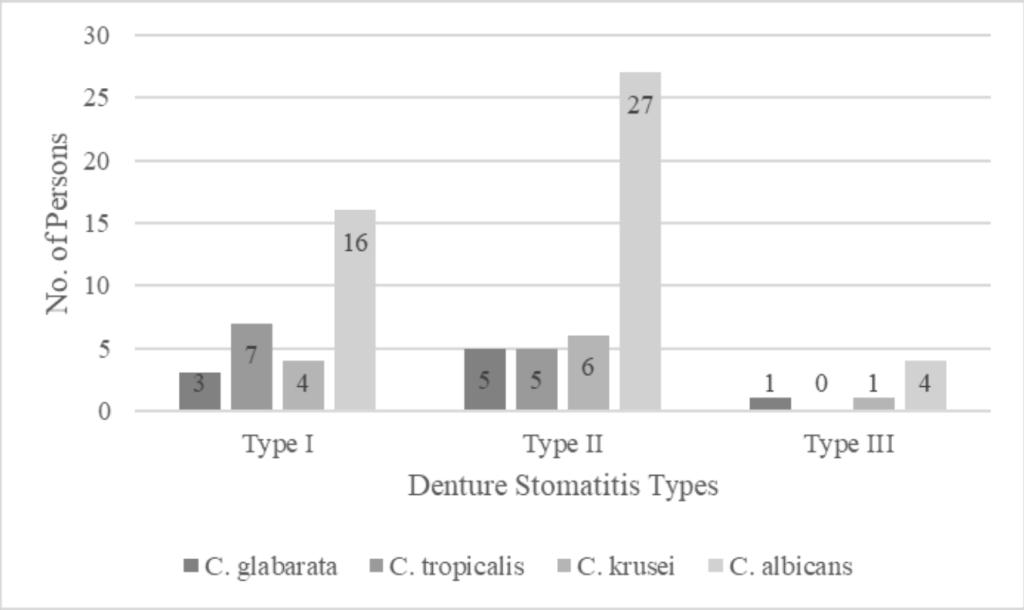
Figure 2: The number of patients that removed their dentures at night were greater than those that did not.
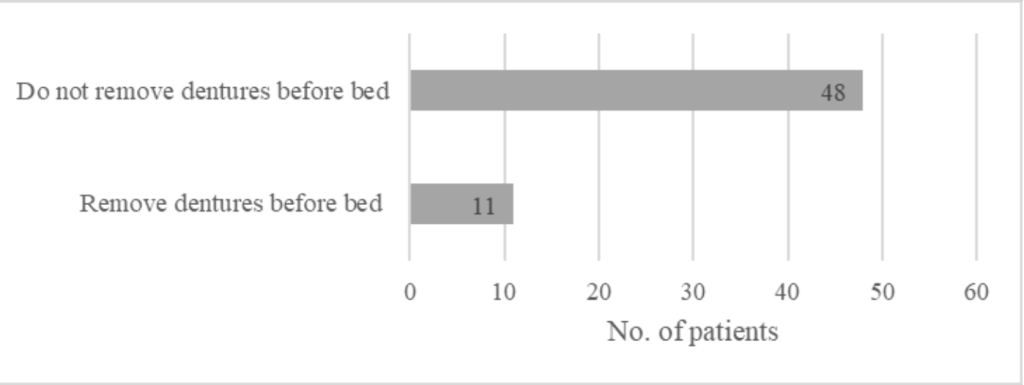
Figure 3: Candida albicans was the most prevalent species noted regardless of frequency of cleaning
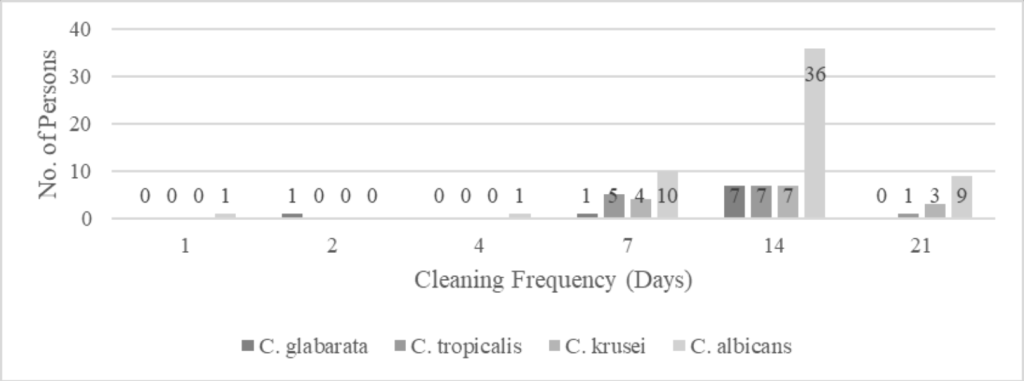
Figure 4: A higher percentage of C. albicans was observed in patients who changed their dentures, while all other spp. of Candida showed lower percentages in patients that never changed their dentures.
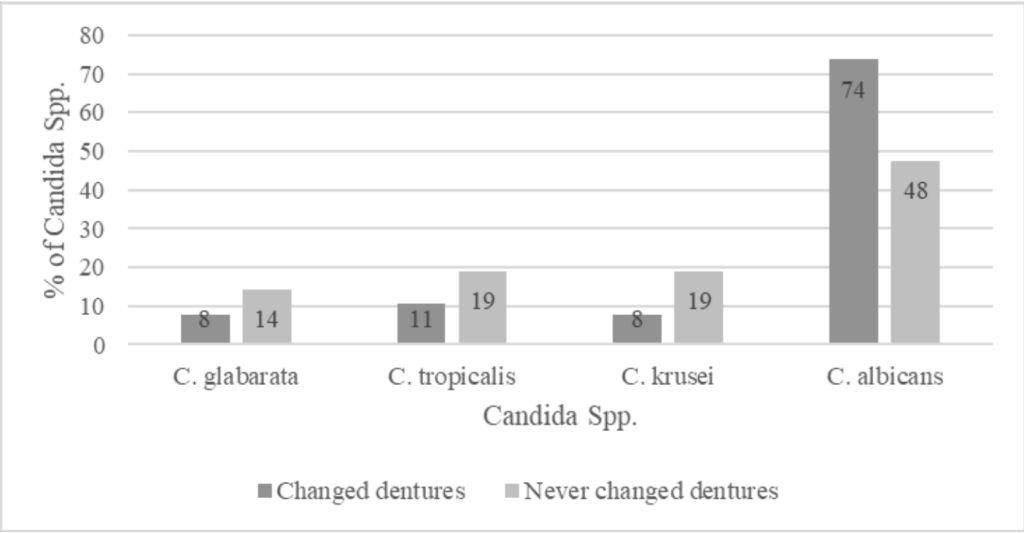
Figure 5: Most species of Candida were present in patients aged 46 and above.
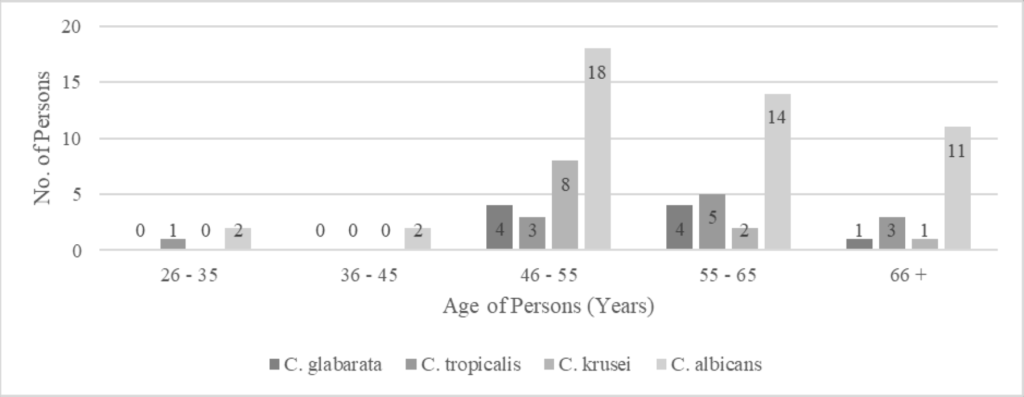
Figure 6: Candida spp. were more prevalent in Upper partial dentures.
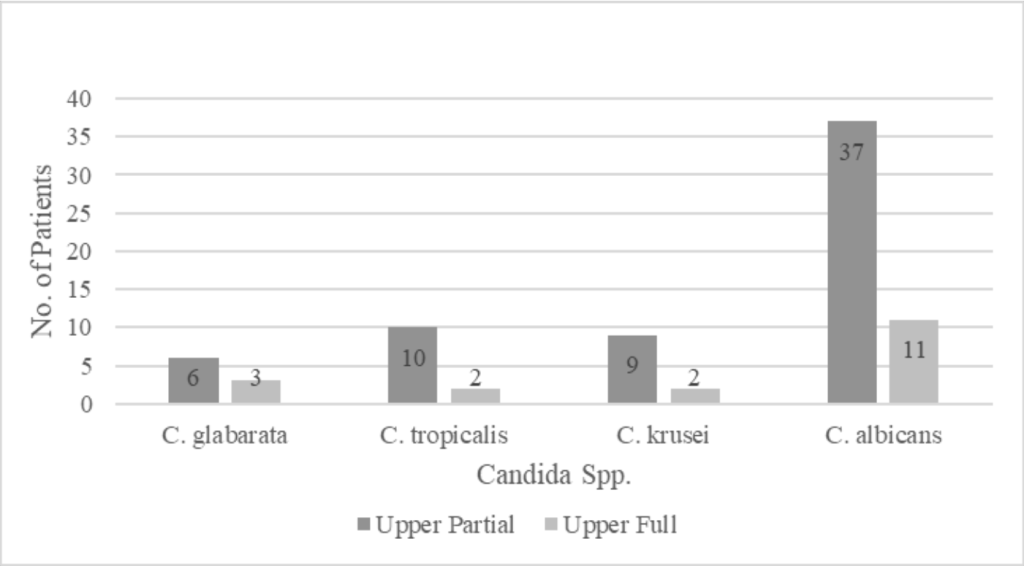
Figure 7: Prevalence of Candida spp. based on denture removal at night.
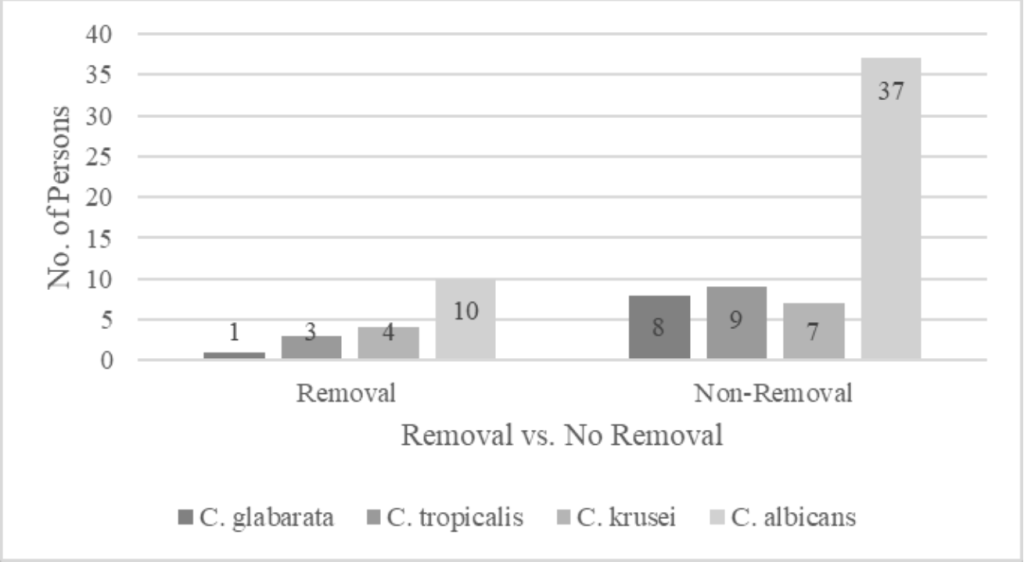
As seen in Figure. 2, 48 of persons who presented with denture stomatitis did not remove their dentures before bedtime. This was also found in a study which stated that prolonged denture use without nightly removal was one of the main etiological factors relating to denture stomatitis.18 Similar studies mentioned that once dentures are not removed at night it allows for biofilm formation on the denture surface which promote the growth of larger population of yeasts, thus leading to a greater prevalence of denture stomatitis.19-20
C. albicans was seen to be the most prevalent species found in persons with denture stomatitis, which is in accordance with multiple studies done in the area.16,21-24 The second most prevalent species was C. tropicalis, which was once again the same trend seen in studies by Prakash et al, C. krusei and C. glabarata are the least prevalent species.21 The reason why these three (3) species are present may be due to the fact that these three species are seen to display antifungal resistance.14
Similarly, the prevalence of Candida spp. was seen to be highest in persons that cleaned their dentures more frequently (Figure 3). This goes against studies who elucidated the fact that poor denture hygiene should result in increased prevalence of denture stomatitis.8,24 However, the results obtained for this parameter could be explained, since the persons in this survey, usually brush with toothbrushes. Therefore, given the higher frequency of brushing, and abrasive toothbrush, it causes micro-scratches and roughens the surface of the denture, which can lead to an increase in Candida spp. biofilm adherence.25 A study also mentioned that if the denture is rough and has irregularities, it would allow for Candida to remain on the denture even after cleaning, and consequently leads to continued infection or reinfection of the palatal mucosa.8 Also, it was mentioned in another study that most denture wearers claim to clean their dentures often, however, despite their attempts, bacterial plaque, dental calculus and debris are readily found on the denture surfaces.26
95% of persons presented with Candida spp. while 5% of them did not present with Candida spp. This same trend was also observed in the study done in 2018 when they found Candida spp. being isolated from 89% of their study population.24 This observation could be attributed to the fact that Candida spp. are found to be one of the main etiological factors leading to denture stomatitis, which would increase the chances of them being prevalent in these patients.27
Persons who had changed their dentures were seen to have a lower prevalence of Candida spp. except for that of C. albicans (Figure 4). This is a justified statement since persons who do not change their dentures will in turn have older dentures, and similarly have the same drawbacks, that can lead to increased growth of Candida spp.19
Candida spp. was shown to be highest in patients between the ages of 46 – 55 and 56 – 65, while the lowest was seen in 26 – 35 and 36 – 45 (Figure 5). This is in accordance with two studies done in 2015, who went on to mention that the old age groups are affected by systemic illness, changes on saliva flow, changes in nourishment, and a reduced immune system, which can all promote fungal overgrowth.19,21
Candida spp. were found to colonize upper partial dentures (Figure 6) more than upper full dentures, with the upper partial dentures accounting for 76% (number?) of the patients presenting with denture stomatitis, with the remaining 24% (number?) being those with upper full dentures (Figure 7). However, there were two studies that agree denture stomatitis is found more in persons with full dentures, as compared to partial dentures.26,28 On the other hand, a study in 2010 agreed that denture stomatitis is found mostly in persons with upper partial dentures.29 This is possibly due to the fact that persons who wear partial dentures may be less inclined to remove the dentures as much, which could lead to increased colonized by Candida spp.
CONCLUSION
Overall, we found, there was no statistical significance between the prevalence of Candida spp., and the type of stomatitis. There also was not any relationship with persons who changed dentures, the condition of the denture, the type of denture, denture removal, person’s age, or cleaning frequency and the prevalence of Candida spp.
Ethical Approval statement: Not Applicable
Conflict of interest statement: Not Applicable
Informed Consent statement: Not Applicable
Funding statement: Not Applicable
Authors Contribution: Dr. Mikhel Naraine conducted clinical examinations, data collection, data analysis, thesis write-up. Dr. Gyanpriya Maharaj conducted data analysis, fungal culturing, manuscript write up. Prof. Abdullah Ansari conducted data analysis. Dr. Carlos Bruzon Varona conducted clinical examinations and data collection.
REFERENCES
- Allen CA,” Diagnosing and managing oral candidiasis. Diagnosing and Managing Oral Candidiasis,” The Journal of the American Dental Association 1992; 123: 81-82.
- Hani U, Shivakumar H, Vaghela R, Osmani R,” Candidiasis: A Fungal Infection- Current Challenges and Progress in Prevention and Treatment,” Infectious Disorders – Drug Target 2015; 15: 42-52
- Grubb SE, Murdoch C, Sudbery PE, Saville SP, Lopez-Ribot JL, Thornhill MH,”Adhesion of Candida albicans to endothelial cells under physiological conditions of flow,” Infection and immunity 2009; 77: 3872–3878
- Takakura N, Sato Y, Ishibashi H, Oshima H, Uchida K, Yamaguchi H, Abe S,”A Novel Murine Model of Oral Candidiasis with Local Symptoms Characteristic of Oral Thrush,” Microbiology and Immunology 2003; 47: 321-326.
- Farah C, Lynch N, McCullough M,”Oral fungal infections: an update for the general practitioner,” Australian Dental Journal 2010; 55: 48-54
- 6.Barbeau J, Séguin J, Goulet JP, de Koninck L, Avon SL, Lalonde B, Rompré P, Deslauriers N, “Reassessing the presence of Candida albicans in denture-related stomatitis,” Oral Surgery, Oral Medicine, Oral Pathology, Oral Radiology, and Endodontology 2003; 95: 51-59.
- Mubarak S, Hmud A, Chandrasekharan S, Ali AA,” Prevalence of denture-related oral lesions among patients attending College of Dentistry, University of Dammam: A clinico-pathological study,” Journal of International Society of Preventive & Community Dentistry2015; 5: 506-512
- Haroon, S, Chaudhary, S, Saleem, S,”Effect of gender, day and night use of complete dentures on oral candidal growth,” Journal of Sheikh Zayed Medical College 2014; 4: 400-410.
- Coco BJ, Bagg J, Cross LJ, Jose A, Cross J, Ramage G,”Mixed Candida albicans and Candida glabrata populations associated with the pathogenesis of denture stomatitis,” Oral Microbiology and Immunology 2008; 23: 377-383.
- Pattanaik S, Bvj V, Pattanaik B, Sahu S, Lodam S,” Denture Stomatitis: A Literature Review,” Journal of Indian Academy of Oral Medicine and Radiology 2010; 22: 136-140.
- Gendreau L, Loewy ZG,”Epidemiology and Etiology of Denture stomatitis,” Journal of Prosthodontics, 2011; 20: 251-260
- Pachava RK, Shenoy KK, Nadendla, LK, Reddy RM,” Denture Stomatitis – A Review,” Indian Journal of Dental Advancements 2013; 5:1107-1112
- Pereira-Cenci T, Del Bel Cury AA, Crielaard W, Ten Cate JM,” Development of candida-associated denture stomatitis: new insights,” Journal of Applied Oral Science 2008; 16:
- Whaley SG, Berkow, EL, Rybak JM, Nishimoto AT, Barker KS, Rogers PD,”Azole Antifungal Resistance in Candida albicans and Emerging Non-albicans Candida Species,” Frontiers in Microbiology, 2017; 7: 2173.
- Rex JH, Rinaldi MG, Pfaller MA,”Resistance of Candida species to fluconazole,” Antimicrobial agents and chemotherapy 1995; 39: 1–8.
- Dorko E, Jenča A, Pilipčinec E, Danko J, Švický E, Tkáčiková L,”Candida-associated denture stomatitis,” Folia Microbiologica 2001; 46: 443-446
- DaSilva H, Piva M, Martins P,” Denture-related oral mucosal lesions among farmers in a semi-arid Northeastern Region of Brazil,” Medicina Oral, Patologia Oral Y Cirugia Bucal 2011; 16: 740-744
- Georges A, Antoine C,” Evaluation of Denture-Related Factors Predisposing to Denture Stomatitis in A Lebanese Population,” Journal of the Academy of Medical Sciences of Bosnia and Herzegovina 2016; 28: 392-396
- Gleiznys A, Zdanaviciene E, Zilinskas J,” Candida albicans importance to denture wearers. A literature review,” Stomatologija, Baltic Dental and Maxillofacial Journal 2015; 17: 54-66.
- Takamiya AS, Monteiro DR, Barão VAR, Pero, AC, Campagnoni MA, Barbosa DB,”Complete denture hygiene and nocturnal wearing habits among patients attending the Prosthodontic Department in a Dental University in Brazil,” Gerodontology 2009; 28:91-96
- Prakash B, Shekar M, Maiti B, Karunasagar I,” Prevalence of Candida spp. among healthy denture and nondenture wearers with respect to hygiene and age,” Journal of Indian Prosthodontic Society 2015; 15: 29-32.
- Sanitá PV, Pavarina AC, Giampaolo ET, Silva, MM, Mima EG, Ribeiro DG, Vergani CE,” Candida spp. prevalence in well controlled type 2 diabetic patients with denture stomatitis,” Oral Surgery, Oral Medicine, Oral Pathology, Oral Radiology, and Endodontology 2011; 111: 726-733.
- Zomorodian K, Haghighi NN, Rajaee N, Pakshir K, Tarazooie B, Vojdani M, Vosoghi M,” Assessment of Candida species colonization and denture-related stomatitis in complete denture wearers,” Medical Mycology 2011; 49(2), 208-211.
- Gauch LM, Pedrosa SS, Silveria-Gomes F, Esteves RA, Marques-da-Silva SH,” Isolation of Candida spp. from denture-related stomatitis in Pará, Brazil,” Brazilian Journal of Microbiology 2018; 49: 148-151
- Oliveira LV, Mesquita MF, Henriques GEP, Consani RLX,” The Effect of Brushing on Surface Roughness of Denture Lining Materials,” Journal of Prosthodontics 2007; 16: 179-184
- Celic R, Zlataric DK, Baucic I,” Evaluation of Denture stomatitis in Croatian Adult Population,” Journal of the Croatian Anthropological Society 2001; 25: 317-326.
- Fontes KB, Farias IB, Cappato LP, DaSilva BA, Azevedo RD, Tucci R, Junior AT,”Candida-Associated Denture stomatitis Treated with Antimicrobial Photodynamic Therapy: Four Cases,” Oral & Maxillofacial Pathology 2017; 123: E34
- Loster BW, Loster J, Wieczorek A, Ryniewicz W,”Mycological Analysis of the Oral Cavity of Patients Using Acrylic Removable Dentures,” Gastroenterology Research and Practice 2012; 1-9.
- Jainkittivong A, Aneksuk V, Langlais RP,”Oral Mucosal lesions in denture wearers,”Gerodontology, 2010; 27: 26-32
